
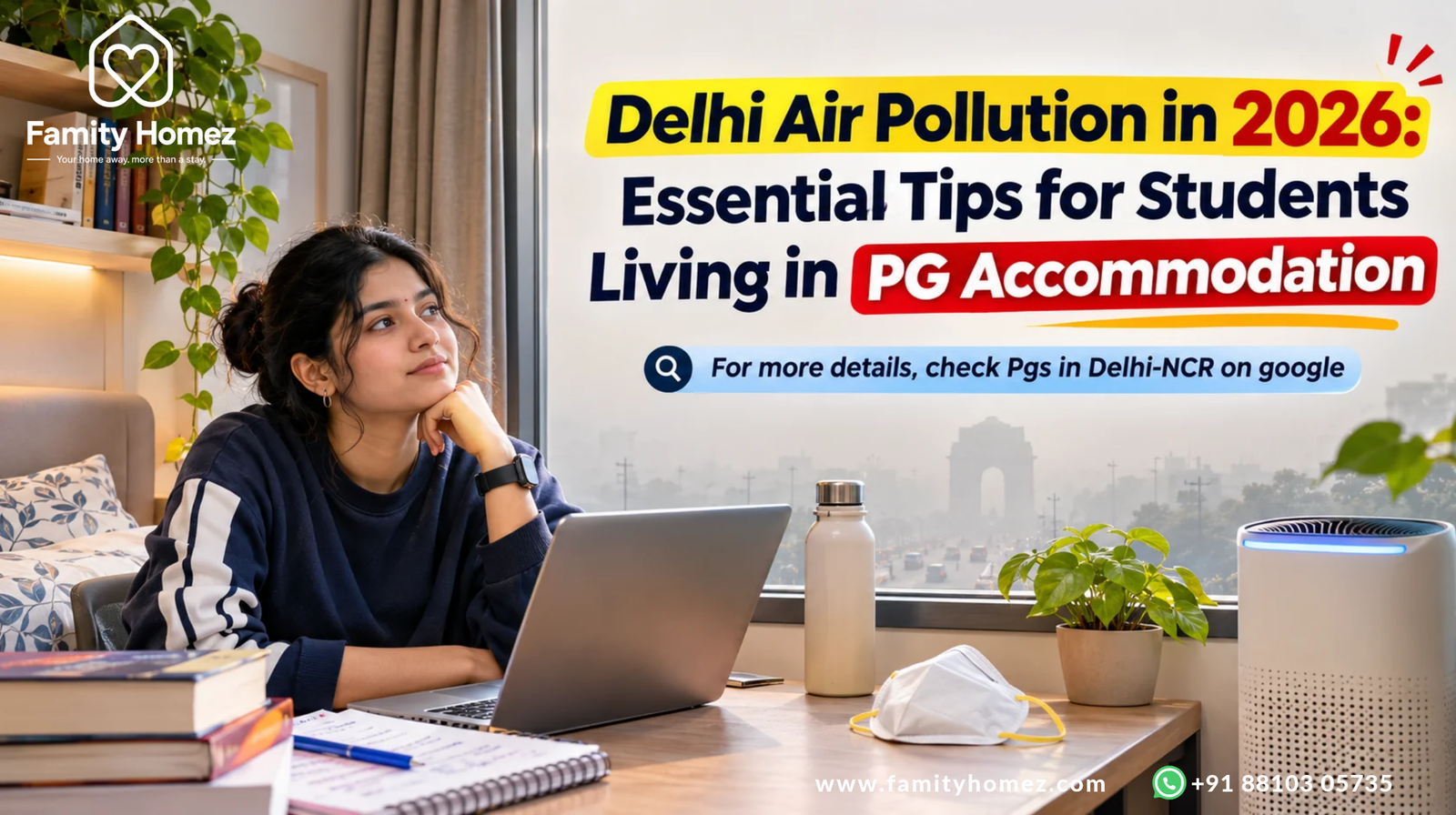
Delhi Air Pollution in 2026: Essential Tips for Students Living in PG Accommodation
Delhi is one of India’s most popular destinations for students and young professionals. Every year, thousands of people move to the capital for higher education, competitive exam preparation, internships, and employment opportunities. Areas such as Laxmi Nagar have become particularly popular because of their coaching institutes, educational centres, metro connectivity, and affordable accommodation options.
However, living in Delhi also comes with certain challenges, especially during the winter months. One of the biggest concerns is air pollution.
As temperatures drop, Delhi frequently experiences deteriorating air quality due to a combination of vehicular emissions, construction dust, industrial activities, seasonal burning, and unfavourable weather conditions. For students who spend considerable time commuting between their PG, coaching institutes, colleges, and libraries, exposure to polluted air can become an important health concern.
Living away from home also means taking greater responsibility for personal health, food habits, hygiene, and everyday routines.
So, how can students protect themselves during Delhi’s pollution season? What precautions should they follow, and what should they consider when choosing a PG accommodation?
Let’s explore some practical ways to manage everyday life during Delhi’s air pollution season.
1. Understanding Why Delhi’s Air Pollution Becomes Worse During Winter
Delhi experiences air pollution throughout the year, but pollution levels often increase significantly during October, November, December, and January.
Several environmental and human activities contribute to this seasonal problem.
Temperature Inversion: During winter, cooler air near the ground can become trapped beneath warmer air above it. This reduces the vertical movement of air and makes it difficult for pollutants to disperse.
Vehicular Emissions: Delhi has a high volume of cars, buses, trucks, motorcycles, and other vehicles. Their emissions contribute to the concentration of harmful pollutants in the atmosphere.
Construction and Road Dust: Construction activities, road repairs, excavation, and movement of vehicles on dusty roads release particulate matter into the air.
Industrial Pollution: Industrial activities in Delhi and surrounding NCR areas contribute to emissions that affect regional air quality.
Crop Residue Burning: Seasonal agricultural residue burning in neighbouring states can contribute to pollution episodes across northern India.
Low Wind Speeds: When wind speeds decrease, pollutants remain concentrated near the ground instead of dispersing quickly.
The combination of these factors can result in poor and very poor air quality during winter.
For students, understanding these causes is the first step towards making informed decisions about outdoor activities, commuting, and daily health habits.
2. Understand the Air Quality Index (AQI) Before Planning Your Day
One of the simplest ways to stay informed about Delhi’s air pollution is to check the Air Quality Index (AQI).
The AQI is a numerical indicator that communicates the level of air pollution and its potential impact on human health. It considers pollutants such as PM2.5, PM10, nitrogen dioxide, sulphur dioxide, carbon monoxide, ozone, ammonia, and lead.
India follows a National AQI scale ranging from 0 to 500.
Here is how the different categories are classified:
| AQI Range | Air Quality | General Health Concern |
|---|---|---|
| 0–50 | Good | Minimal health impact |
| 51–100 | Satisfactory | Minor discomfort for sensitive individuals |
| 101–200 | Moderate | Breathing discomfort for sensitive groups |
| 201–300 | Poor | Discomfort may occur with prolonged exposure |
| 301–400 | Very Poor | Increased risk of respiratory illness with prolonged exposure |
| 401–500 | Severe | Significant health effects, including for otherwise healthy individuals |
Students should make it a habit to check AQI before leaving their PG, especially when planning outdoor exercise, long commutes, or other physical activities.
You can check air quality through:
-
Central Pollution Control Board (CPCB) AQI portal.
-
Delhi Government’s official air quality portal.
-
The SAMEER air quality monitoring application.
Practical Tip: Do not depend on how the sky looks outside. Pollution levels are not always visible. Check the AQI readings and follow the health advisories issued by local authorities.
3. Wear a Suitable Mask When Travelling Outdoors
Students living in areas like Laxmi Nagar frequently travel to coaching institutes, metro stations, colleges, libraries, and workplaces.
During periods of high air pollution, outdoor commuting can increase exposure to fine particulate matter, particularly PM2.5.
A properly fitted N95 or equivalent particulate respirator can help filter airborne particles when worn correctly.
Here are some things students should remember:
-
Choose a properly certified N95 or equivalent respirator.
-
Ensure that the mask fits closely around your nose and mouth.
-
Avoid gaps around the edges.
-
Replace disposable masks according to the manufacturer’s instructions.
-
Do not assume that ordinary cloth masks or scarves offer equivalent protection against fine particulate matter.
Students with asthma or existing respiratory and cardiovascular conditions should consult their healthcare professional about appropriate respiratory protection.
A mask should not be treated as a complete solution to air pollution. Reducing unnecessary exposure and following official health advisories remain important.
4. Avoid Unnecessary Outdoor Activities During High Pollution Days
College students and working professionals often have packed schedules.
Their daily routine may include morning walks, gym sessions, outdoor sports, commuting, shopping, and evening activities.
However, when Delhi’s AQI reaches poor, very poor, or severe levels, students should reconsider unnecessary outdoor physical activities.
Consider these precautions:
Avoid outdoor workouts: Strenuous exercise increases breathing rates, which can increase the amount of polluted air inhaled.
Choose indoor activities: When outdoor air quality is particularly poor, consider exercising indoors instead.
Plan your schedule carefully: Check AQI before planning long journeys or outdoor activities.
Avoid busy traffic areas: Spending unnecessary time near congested roads can increase exposure to vehicle emissions.
Follow local advisories: Pay attention to pollution-related restrictions and health recommendations issued by authorities.
This does not mean students should completely stop exercising during winter. Regular physical activity remains important. The goal is to choose a safer time and environment.
5. Maintain Cleanliness Inside Your PG Room
Students spend a significant amount of time inside their PG rooms, whether studying, sleeping, attending online classes, or relaxing after a busy day.
Maintaining cleanliness is an important part of creating a comfortable living environment.
Although regular cleaning cannot eliminate outdoor air pollution, it can help reduce settled dust and certain indoor sources of pollution.
Here are some simple practices:
Clean surfaces regularly: Use a damp cloth to clean study tables, shelves, furniture, and other frequently used surfaces.
Keep bedding fresh: Wash bedsheets, pillow covers, and blankets regularly to maintain personal hygiene.
Avoid unnecessary clutter: Excessive belongings can collect dust and make regular cleaning more difficult.
Maintain floor cleanliness: Damp mopping can help prevent settled dust from becoming airborne during cleaning.
Keep personal belongings organised: Store clothes, books, and other items properly to make cleaning easier.
Avoid indoor smoking: Tobacco smoke is an additional source of indoor air pollution and should be avoided.
Another important consideration is ventilation. Opening windows is not automatically beneficial during periods of severe outdoor pollution. Check outdoor air quality and follow appropriate guidance when deciding when to ventilate your room.
6. Pay Attention to Your Food and Nutrition
Living away from home often changes a student’s eating habits.
Some students skip breakfast because of early classes, while others depend heavily on packaged snacks, fast food, and irregular meals.
During winter, maintaining a balanced diet becomes especially important for overall health and well-being.
Although no particular food can prevent the effects of air pollution or remove pollutants from the lungs, good nutrition supports the body’s normal functioning.
Consider including the following in your daily diet:
Seasonal Fruits: Include oranges, guavas, apples, amla, and other seasonal fruits as part of a balanced diet.
Green Vegetables: Spinach, broccoli, carrots, and other vegetables provide essential vitamins and minerals.
Protein-Rich Foods: Include dal, paneer, milk, beans, chickpeas, and other protein sources.
Adequate Water: Maintain regular water intake throughout the day.
Balanced Meals: Avoid depending excessively on packaged snacks and highly processed food.
Students should also avoid smoking and exposure to second-hand smoke.
A consistent eating routine can make a meaningful difference to everyday health, particularly when managing a busy student schedule.
7. Choose Your Daily Commute Wisely
For students staying in Laxmi Nagar, travelling to coaching centres, colleges, and workplaces is part of everyday life.
Delhi’s traffic congestion can increase the time spent around vehicle emissions, particularly during peak commuting hours.
Choosing convenient transportation options can help reduce unnecessary exposure and make daily travel easier.
Here are some practical suggestions:
-
Use the Delhi Metro whenever it is a convenient option.
-
Avoid spending unnecessary time near congested roads.
-
Combine multiple errands into one journey wherever possible.
-
Check AQI before planning long outdoor journeys.
-
Wear an appropriate respirator when necessary and as advised.
-
Follow official traffic and pollution-related advisories.
One of the advantages of staying in a well-connected locality is that students can access educational institutions, commercial areas, and other parts of Delhi more conveniently.
For this reason, metro connectivity and proximity to everyday facilities are important factors when selecting a PG in Delhi.
8. What Should Students Look for When Choosing a PG During Pollution Season?
Choosing a PG is not simply about comparing room rent or finding the cheapest available accommodation.
Students should also consider the overall living environment, cleanliness, available facilities, and convenience of the location.
Here are some important factors to evaluate before finalising a PG accommodation in Delhi.
A. Regular Housekeeping
Clean rooms and common areas contribute to a more hygienic residential environment.
Ask about the housekeeping schedule and understand which areas are covered by the cleaning service.
B. Proper Ventilation
Check whether the room has suitable windows and ventilation arrangements.
Also understand how ventilation is managed during periods when outdoor air quality is particularly poor.
C. Clean Bedding and Living Spaces
A comfortable room should also be easy to maintain.
Check the condition of beds, mattresses, furniture, bathrooms, and other shared facilities.
D. Access to Nutritious Meals
Food is one of the most important considerations for students living away from their families.
Look for a PG that offers regular meals and provides convenient food arrangements so that residents do not have to depend entirely on outside food.
E. Convenient Location
A PG close to metro stations, coaching institutes, colleges, and essential services can reduce unnecessary commuting.
F. Drinking Water Facilities
Check the availability and maintenance of drinking water facilities.
G. Responsible Management
A well-managed PG should have a clear process for handling maintenance requests, cleanliness concerns, and resident requirements.
These factors contribute to a more comfortable living experience, particularly for students adjusting to a new city.
9. Recognise the Symptoms of Air Pollution Exposure
Air pollution can affect individuals differently.
Some people may experience mild irritation, while others may develop more noticeable respiratory symptoms.
Common symptoms associated with exposure to polluted air include:
-
Persistent coughing.
-
Throat irritation.
-
Burning or watering eyes.
-
Breathing discomfort.
-
Wheezing.
-
Chest tightness.
-
Worsening asthma symptoms.
Students with asthma, respiratory conditions, or cardiovascular problems may be particularly vulnerable.
Do not ignore persistent or worsening symptoms.
If you experience breathing difficulties, ongoing coughing, or chest discomfort, consult a qualified healthcare professional. Severe breathing difficulties or chest pain require urgent medical attention.
Students who already use prescribed medication should continue following their doctor’s instructions.
10. Build Healthier Daily Habits While Living Away From Home
Moving to a new city means becoming more responsible for your personal health and daily routine.
Students can adopt a few simple habits to make everyday life more manageable during Delhi’s pollution season.
Here is a practical checklist:
-
Check the AQI every morning.
-
Maintain a regular sleep schedule.
-
Eat balanced meals at consistent times.
-
Keep your room and belongings clean.
-
Carry a suitable mask when travelling.
-
Avoid unnecessary outdoor exposure during high-pollution periods.
-
Choose indoor physical activities when outdoor air quality is poor.
-
Stay hydrated throughout the day.
-
Avoid smoking and indoor exposure to smoke.
-
Keep necessary prescribed medication accessible.
Small and consistent habits can help students make more informed decisions about their health.
11. Why Your Choice of PG Accommodation Matters
When students move to Delhi, they usually focus on finding accommodation close to their college, coaching institute, or workplace.
However, a comfortable PG should offer more than just a place to sleep.
Clean living spaces, regular meals, housekeeping, convenient connectivity, and a welcoming residential environment all contribute to a better everyday experience.
At Famity Homez, we understand the everyday requirements of students and working professionals living away from their families.
With separate accommodation options for boys and girls in Laxmi Nagar, Famity Homez focuses on providing a convenient residential experience through furnished accommodation, regular meals, Wi-Fi, housekeeping, and a welcoming community environment.
We believe that choosing the right accommodation is an important part of settling into a new city.
If you are searching for a PG in Laxmi Nagar, consider your daily lifestyle requirements, the available facilities, and the overall residential environment before making your decision.
Frequently Asked Questions (FAQs)
1. Why does Delhi experience high air pollution during winter?
Delhi often experiences higher pollution levels during winter because of low wind speeds, temperature inversion, vehicular emissions, construction dust, industrial pollution, and seasonal agricultural residue burning. These factors make it difficult for pollutants to disperse.
2. How can students protect themselves from Delhi’s air pollution?
Students can reduce exposure by checking AQI regularly, avoiding unnecessary outdoor activities during high-pollution periods, wearing a properly fitted particulate respirator when appropriate, maintaining clean indoor spaces, and following official health advisories.
3. Is it safe to exercise outdoors during high AQI levels?
Outdoor exercise, particularly strenuous physical activity, should be avoided when air quality is poor or very poor. Students can consider indoor exercise and follow health advisories based on the prevailing AQI.
4. Which mask is suitable for Delhi air pollution?
A properly fitted N95 or equivalent particulate respirator can help filter fine airborne particles. Ordinary cloth masks, scarves, and handkerchiefs should not be considered equivalent protection.
5. How can I maintain cleanliness inside my PG room during pollution season?
Regular dusting with a damp cloth, damp mopping, washing bedding, organising belongings, and avoiding indoor smoking can help maintain a cleaner living environment.
6. What facilities should I check before choosing a PG in Delhi?
Look for regular housekeeping, suitable ventilation, clean rooms, drinking water facilities, regular meal arrangements, security measures, and convenient connectivity to your college or workplace.
7. Is Laxmi Nagar a convenient location for students in Delhi?
Laxmi Nagar offers metro connectivity, access to coaching institutes, educational facilities, markets, and essential services. It is therefore a convenient residential option for many students pursuing education or competitive exam preparation in Delhi.
8. Does Famity Homez offer separate PG accommodation for boys and girls?
Yes, Famity Homez offers separate accommodation options for boys and girls in Laxmi Nagar. Students can contact the team to check property details, room availability, and pricing.
9. Are meals available at Famity Homez?
Yes, Famity Homez provides three meals a day along with tea and snacks, helping residents manage their daily food requirements while living away from home.
Conclusion: Make Your Health a Priority While Living in Delhi
Delhi offers excellent opportunities for education, professional development, and career growth. However, living in the city also requires awareness of environmental challenges, particularly during the winter pollution season.
For students staying away from their families, maintaining personal hygiene, eating balanced meals, checking AQI, and making sensible commuting decisions can help create a healthier daily routine.
Choosing the right PG accommodation is another important part of this journey. Look beyond rent and location, and consider the overall living environment, cleanliness, food arrangements, and everyday facilities before making your decision.
At Famity Homez, we aim to make living away from home more convenient and comfortable for students and working professionals.
Because a better student life begins with a comfortable place to call home.